


SECRET INTEGRITY CHECK AS AN ANTI-CORRUPTION TOOL: INTERNATIONAL EXPERIENCE AND PROSPECTS OF IMPLEMENTATION
https://doi.org/10.52425/25187252_2024_34_36
Abstract
The article analyzes the secret Integrity Check as a preventive measure against corruption in the public sector. The definition and typology of checks, including random and targeted checks, as well as their main features are given. Examples of the use of this tool in international practice are considered, including the experience of the USA, Australia, Romania, Moldova, Hungary and Singapore, which show its positive effect in preventing corrupt behavior and strengthening public administration transparency. A retrospective analysis of the implementation of the Kazakhstan mechanism for checking professional integrity is considered. Examples of situational cases of checking for professional integrity are analyzed, in which potential risks are identified. The authors offer recommendations for the successful implementation of Integrity Check, emphasizing the importance of legislative regulation, employee training and compliance with the principles of proportionality and ethics. The article also highlights the potential limitations and risks associated with secret inspections, as well as ways to minimize them, which makes the article useful for countries planning to implement such a tool.
Keywords
corruption,
employee,
prevention,
provocation,
testing,
secret check,
integrity,
honesty,
risk,
mechanism
About the Authors
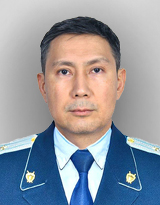
D. N. Zholdasbayev
The Law Enforcement Academy under the Prosecutor General’s Office of the Republic of Kazakhstan
Kazakhstan
Kazakhstan
Zholdasbayev Daniyar Nurlybekuly – Master's Student of the Academy of Law Enforcement Agencies under the Prosecutor General's Office of the Republic of Kazakhstan
Kosshy c.
A. B. Kazbekova
The Law Enforcement Academy under the Prosecutor General’s Office of the Republic of Kazakhstan
Kazakhstan
Kazakhstan
Kazbekova Aisulu Bolatovna – Leading Researcher at the Center for the Study of Problems in the Field of Protection of Public Interests of the Interdepartmental Research Institute of the Academy of Law Enforcement Agencies under the Prosecutor General's Office of the Republic of Kazakhstan, Master of Economic and Legal Sciences
Kosshy c.
References
1. Prenzler, T. Models of police oversight: a critique / T. Prenzler, C. Ronken // Policing and Society: An International Journal. – 2001. – № 11:2. – Pp. 151-180. – DOI:10.1080/10439463.2001.9964860.
2. Hac, P. Integrity Testing in Poland – Issues, Experience and Practical Comments / P. Hac // Internal Security. – 2016. – № 8 (2). – Pp. 67-84. – DOI:10.5604/01.3001.0010.2271.
3. Sadinov, T. Testirovanie na dobroporjadochnost': sb. nauchn. st. po materialam mezhdunar. kruglogo stola «Aktual'nye voprosy protivodejstvija korrupcii». – Kosshy: Akademija pravoohranitel'nyh organov pri General'noj prokurature Respubliki Kazahstan, 2024. – S. 48-110.
4. Newburn, T. Understanding and preventing police corruption: lessons from the literature / T. Newburn. – Police Research Series Paper 110. – London: Home Office, 1999. – 65 p. 5. Wilson, A.M. The role of mystery shopping in the measurement of service performance [Electronic resource] / A.M. Wilson // Managing Service Quality: An International Journal. – 1998. – № 6 (8). – Pp. 414-420. – Access mode: https://doi.org/10.1108/09604529810235123 (Access data: 23.12.2024).
5. Marx, G.T. Undercover: Police Surveillance in America / G.T. Marx. – Berkeley; Los Angeles; London: University of California Press, 1988. – 368 p.
6. Calvey, D. Covert Research: The Art, Politics and Ethics of Undercover Fieldwork / D. Calvey // SAGE Publications Ltd. – 2017.
7. Almagambetov, A. Problemy predotvrashhenija korrupcii v gosudarstvennoj sluzhbe Kazahstana i rol' tajnoj proverki na dobroporjadochnost' / A. Almagambetov // Vestnik Kaspijskogo universiteta prava i obshhestvennyh nauk. – 2020. – № 2. – S. 34-50.
8. Kapsaljamova, Z. Mery po povysheniju prozrachnosti i dobroporjadochnosti v dejatel'nosti gosorganov Kazahstana / Z. Kapsaljamova // Vestnik KazNU. Serija juridicheskaja. – 2018. – № 3. – S. 88-96.
9. Madumarov, B.K. Tajnaja proverka na dobroporjadochnost': pravovye aspekty i jeffektivnost' primenenija v Kazahstane / B.K. Madumarov // Juridicheskij zhurnal Kazahstana. – 2019. – № 3. – S. 45-58.
10. Sadykov, E.N. Problemy jetichnosti skrytyh proverok gosudarstvennyh sluzhashhih: sravnitel'nyj analiz mezhdunarodnoj i kazahstanskoj praktiki / E.N. Sadykov // Vestnik KazNU. Serija juridicheskaja. – 2021. – № 2. – S. 98-110.
11. A.M. Sampei. Allen. Integrity testing. – 13 p. [Electronic resource] – Access mode: https://rm.coe.int/CoERMPublicCommonSearchServices/DisplayDCTMContent?documentId=09000016806e ef2b (Access data: 10.10.2024).
12. V. Suruzhiu. Kak NCBK testiruet na professional'nuju nepodkupnost' [Jelektronnyj resurs] – Rezhim dostupa: https://noi.md/ru/news_id/210046 (data obrashhenija: 10.10.2024).
13. Bodnar Adam. Res interpretata: juridicheskaja sila postanovlenij Evropejskogo suda po pravam cheloveka dlja gosudarstv, ne javljajushhihsja storonami v dele / Bodnar Adam // Sravnitel'noe Konstitucionnoe Obozrenie. – 2011. – № 3. – S. 82-114.
Review
For citations:
Zholdasbayev D.N., Kazbekova A.B. SECRET INTEGRITY CHECK AS AN ANTI-CORRUPTION TOOL: INTERNATIONAL EXPERIENCE AND PROSPECTS OF IMPLEMENTATION. Bulletin of the Law Enforcement Academy. 2024;(4 (34)):36-45. (In Kazakh) https://doi.org/10.52425/25187252_2024_34_36
Views:
105
JATS XML



 Email this article
