


TOPICAL ISSUES OF CONDITIONAL EARLY RELEASE OF CONVICTED PERSONS ON TNE EXAMPLE OF SOME COUNTRIES
https://doi.org/10.52425/25187252_2026_39_97
Abstract
This scientific article considers the issues of improvement of the institute of parole from further serving of punishment in the form of imprisonment. Comparative analysis of the legislation and its practical application in other countries are given. In Western countries with a more developed human rights legal framework, these decisions are not made solely by any official, but are often the expression of an opinion consolidated with society. Some stagnation of the tendency of development of this institution and lack of public participation in it in Kazakhstan is pointed out.
Revealing the conflicts and law enforcement difficulties, the most optimal ways to solve the problem are proposed, meeting today's interests and realities through the prism of developing a partnership between the penitentiary system and society.
About the Authors
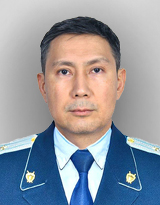
Y. K. Ryskeldiyev
The Law Enforcement Academy under the Procesutor General’s Office of the Republic of Kazakhstan
Kazakhstan
Kazakhstan
Ryskeldiyev Yerkebulan Kadyrbekovich – Associate Professor of the Department of Criminal Prosecution and Operational Investigative Activities at the Institute of Professional Training, Master of Law
Kosshy
M. Altynbek
Zhambyl Regional Bar Association
Kazakhstan
Kazakhstan
Altynbek Maksat – Member of Zhambyl Regional Bar Association
Taraz
References
1. V.A. Golec, V.I. Shulenkova. Problemy i puti sovershenstvovanija instituta uslovno-dosrochnogo osvobozhdenija v ugolovno-ispolnitel'noj sisteme Respubliki Belarus' // Nauka – praktike: materialy VI Mezhdunarod. nauch.-prakt. konf. – 2025. – ch.1. – S. 185-187.
2. Disko, V.I. Uslovno-dosrochnoe osvobozhdenie ot nakazanija po ugolovnomu pravu Respubliki Belarus' / V.I. Disko // Pravo.by. – 2016. – № 1 (39). – S. 72-78.
3. Kudasheva, V.V. Institut uslovno-dosrochnogo osvobozhdenija ot nakazanija v Soedinennyh Shtatah Ameriki / V.V. Kudasheva // Otechestvennaja jurisprudencija «Olimp». – 2018. – № 5. – S. 44-47.
4. Tit,A.A. Pravovaja priroda uslovno-dosrochnogo osvobozhdenija v ugolovnom zakonodatel'stve Rossijskoj Federacii i Respubliki Belarus' / A.A. Tit // Ugolovnoe pravo i kriminologija. – 2017. – № 4. – S. 45-59.
5. Bottomley, A.K. Parole in Transition: A Comparative Study of Origins, Developments, and Prospects for the 1990s / A.K. Bottomley // Crime and Justice: A Review of Research. University of Chicago Press. – 1990. – Vol. 12. – e319-374.
6. Nuridin, S. Parole and Early Release from Punishment: Problems of Improving Application Mechanisms in the Republic of Kazakhstan and Foreign Experience / S. Nuridin, E. Ongarabaev // Journal of Law and Sustainable Development. – 2023. – № 11 (9). – e1545.
7. Tournier, P.V. Systems of Conditional Release (Parole) in the Member States of the Council of Europe [Jelektronnyj resurs] / P.V. Tournier. – 2004. – Vol. 1. – Rezhim dostupa: https://doi.org/10.4000/champpenal.378 (data obrashhenija: 20.02.2026).
8. Urazalin, B.T. Prakticheskie rekomendacii, napravlennye na razvitie nauchno-tehnicheskogo obespechenija soderzhanija v uchrezhdenijah minimal'noj bezopasnosti / B.T. Urazalin // Құқyқ қorғau organdary akademijasynyң Zharshysy. – 2024. – № 3 (33). – S.79-89.
Review
For citations:
Ryskeldiyev Y.K., Altynbek M. TOPICAL ISSUES OF CONDITIONAL EARLY RELEASE OF CONVICTED PERSONS ON TNE EXAMPLE OF SOME COUNTRIES. Bulletin of the Law Enforcement Academy. 2026;(1 (39)):97-105. (In Russ.) https://doi.org/10.52425/25187252_2026_39_97
Views:
93
JATS XML






 Email this article
