


LEGAL MECHANISMS OF ASSET FORFEITURE AND RECOVERY IN THE PEOPLE'S REPUBLIC OF CHINA: ANALYSIS OF EXPERIENCE AND PROSPECTS FOR APPLICATION IN KAZAKHSTAN
https://doi.org/10.52425/25187252_2025_36_187
Abstract
The article is devoted to the study of the PRC legal system in the field of confiscation and mechanism of return of illegally acquired assets. The article examines the modern legal framework, including the provisions of the Criminal Code and Criminal Procedure Code, as well as the practice of their application in the fight against corruption and economic crimes. The research focuses on the Quanfang method, which is an innovative model that encourages offenders to cooperate voluntarily with law enforcement authorities to expedite asset recovery procedures. The Quanfang method combines elements of criminal procedure and international cooperation, demonstrating high efficiency. The research article emphasizes the benefits of this approach, including reduced time and cost, simplified evidentiary procedures, and reduced burden on the judicial system. However, the article identifies shortcomings such as the limited application of civil law mechanisms and the need to modernize evidentiary standards, which requires further improvement of the PRC legal framework. The article focuses on the possibility of adapting effective PRC practices to improve Kazakhstan's legislation, which contributes to strengthening the national legal system and increasing confidence in state institutions.
Keywords
confiscation,
return,
assets,
legal system,
legislation,
international cooperation,
repatriation,
quanfang
About the Authors
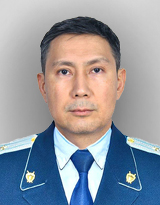
G. M. Abubakirova
Kyrgyz National University named after J. Balasagyn
Kyrgyzstan
Kyrgyzstan
Abubakirova Gulnur Muratbekkizi – Graduate Student of the Department of Criminal Law and Criminology of the Law Institute
Bishkek
G. E. Zhandykeyeva
Q-university
Kazakhstan
Kazakhstan
Zhandykeyeva Gulnar Esenbekovna – Senior Lecturer of the Department of Legal Disciplines, PhD
Almaty
References
1. Wei, Zh. China's International Cooperation in the Fight Against Corruption / Zh. Wei // Journal of International Law. Beijing. – 2018. – Vol. 12, № 3. – Pp. 45-67.
2. Balashov, R.S. Rol' neoficial'nyh setej v rabote po vozvratu pohishhennyh aktivov iz-za rubezha / R.S. Balashov // Құқyқ қorғau organdary akademijasynyң Zharshysy. – 2021. – № 3 (21). – S. 93-100.
3. Feng, H. Rules and Practice of International Judicial Cooperation in Criminal Matters / H. Feng // Beijing: Peking University Press. – 2008. – № 6 (5). – Pp. 41-42.
4. Lei, Zh. Alternative Measures to Extradition and Their Application in International Prosecution / Zh. Lei // Legal Review. Beijing. – 2017. – № 2. – Pp. 159-161.
5. Brun, J.-P. Asset Recovery Handbook: A Guide for Practitioners / The World Bank, United Nations Office on Drugs and Crime / J.-P. Brun, et al. – Vienna, 2011. – 458 p.
6. Yanan, Sh. Interpretation of Provisions on Confiscation of Illicit Gains from the Perspective of Criminal Dogmatics / Sh. Yanan // Legal Science. Beijing. – 2015. – № 11. – Pp. 122-123.
7. Lei, Ch. On Some Issues Related to the Procedure of Confiscating Illicit Gains in China / Ch. Lei // Rule of Law Studies. Beijing. – 2015. – № 4. – Pp. 99-102.
Review
For citations:
Abubakirova G.M., Zhandykeyeva G.E. LEGAL MECHANISMS OF ASSET FORFEITURE AND RECOVERY IN THE PEOPLE'S REPUBLIC OF CHINA: ANALYSIS OF EXPERIENCE AND PROSPECTS FOR APPLICATION IN KAZAKHSTAN. Bulletin of the Law Enforcement Academy. 2025;(2 (36)):187-194. (In Russ.) https://doi.org/10.52425/25187252_2025_36_187
Views:
102
JATS XML




 Email this article
