


THE APPLICATION OF MASSIVE OPEN ONLINE COURSES (MOOCs) IN THE TEACHING OF CRIMINAL LAW DISCIPLINES
https://doi.org/10.52425/25187252_2025_38_104
Abstract
Currently, massive open online courses are widely used in the educational process as a new digital format of learning. This digital educational tool has significant potential for integration into the training of future lawyers and law enforcement officers, especially in the context of criminal law training. This article examines the current aspects of effective use of massive open online courses in teaching criminal law disciplines, their integration capabilities, adaptation features, and emerging methodological and organizational difficulties. Analyzing the role and significance of MOOCs in the educational process, the authors explore their potential in improving professional training, enhancing the quality of learning through interactive tools, and developing students' skills in understanding and working with legal situations. Furthermore, the article describes the organizational features, methodological approaches to teaching criminal law disciplines in the MOOC format, and their importance in shaping the legal consciousness of students. Ways to improve the effectiveness of learning are proposed by including case studies, situational tasks, and practical models in online courses on criminal law disciplines. The research results contain recommendations and conclusions aimed at improving the effectiveness of MOOC use in the digital educational space.
About the Authors
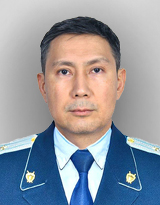
D. Zh. Belkhozhayeva
Abai Kazakh National Pedagogical University
Kazakhstan
Kazakhstan
Belkhozhayeva Dinara Zhomartovna – Senior Lecturer at the Department of Jurisprudence Faculty of History and Law Kazakh National Pedagogical University named after Abai, PhD.
Almaty
K. Turlykhankyzy
Abai Kazakh National Pedagogical University
Kazakhstan
Kazakhstan
Turlykhankyzy Kuralay – Senior Lecturer at the Department of Jurisprudence Faculty of History and Law Kazakh National Pedagogical University named after Abai, PhD.
Almaty
References
1. Hohrjakov, M.A. Opyt perehoda juridicheskogo vuza k distancionnoj forme obuchenija v period pandemii: analiz mnenij studentov i prepodavatelej / M.A. Hohrjakov, T.Ju. Vilkova, S.A. Nasonov // Perspektivy nauki i obrazovanija. – 2021. – № 6 (54). – S. 97-109.
2. Mackness, J., Mak, S.F.J., & Williams, R. The ideals and reality of participating in a MOOC: Proceedings of the 7th International Conference on Networked Learning, 2010. – № 10. – Pp. 266-274.
3. I. De Waard. MOOC design: Ubiquitous, open learning in the cloud // Handbook of mobile learning, Routledge, 2013. – Pp. 356-368.
4. S.P. Atkonson. Online professional development for teachers: Emerging models and methods. In Handbook of research on K-12 online and blended learning, 2014. – Pp. 201-226.
5. A. Ezen-Can, et al. Unsupervised modeling for understanding MOOC discussion forums: a learning analytics approach // Proceedings of the fifth international conference on learning analytics and knowledge, 2015. – Pp. 146-150.
6. X. Wang, M. Wen, C.P. Rosé. Towards triggering higher-order thinking behaviors in MOOCs // Proceedings of the sixth international conference on learning analytics & knowledge, 2016. – Pp. 398407.
7. E. Fincham, et al. Counting clicks is not enough: Validating a theorized model of engagement in learning analytics // Proceedings of the 9th international conference on learning analytics & knowledge, 2019. – Pp. 501-510.
8. Dokuchaeva, N.V. K voprosu massovyh otkrytyh onlajn-kursov v kontekste nepreryvnogo obrazovanija / N.V. Dokuchaeva, S.A. Ivanova, D.B. Tleumbetova // Bulletin of the Karaganda University Pedagogy series. – 2025. – № 30.1 (117). – S. 116-123.
9. Shrymbaj, D.A. Zhappaj ashyқ onlajn kurs құru negіzіnde mұғalimderdiң kәsіbi құzyrettiliginің қalyptastyru / D.A. Shrymbaj, Je.T. Adylbekova, G.M. Abdimanapova, M.S. Balғanova // Torajғyrov universitetіnің Habarshysy. Pedagogikalyқ serijasy. – 2024. – № 1. – 31-45 b.
10. Ospanova, N. Problemy postroenija modeli platformy dlja realizacii massovyh otkry tyh onlajnkursov / N. Ospanova i dr. // Vestnik KazATK. – 2025. – Tom 137. № 2. – S. 209-220.
11. Ergalieva, A.B. Vosprijatie studentami i prepodavateljami ispol'zovanija mook pri obuchenii professional'nogo anglijskogo jazyka / A.B. Ergalieva, D.B. Shajahmetova // Vestnik KazNPU imeni Abaja. Serija: Pedagogicheskie nauki. – 2022. – № 2 (74). – S. 88-95.
12. Rysbekkyzy, N. Sravnitel'nyj analiz platform massovogo otkrytogo onlajn kursa (MOOK) v prepodavanii anglijskogo jazyka / N. Rysbekkyzy i dr. // Eurasian Journal of Philology. Science and Education. – 2025. – № 197 (1). – S. 192-201.
13. Vozgrin, I.A. Osnovy metodiki i didaktiki kursa «Kriminalistika» / I.A. Vozgrin, A.A. Stepanov. – SPb., 2002. – 222 s.
14. Jurkov, S.A. Osobennosti ispol'zovanija virtual'nyh dosok dlja formirovanija professional'nopravovoj kompetentnosti budushhego jurista /s.A. Jurkov, M.S. Ivshin // Perspektivy nauki i obrazovanija. – 2020. – № 4 (46). – S. 425-440.
15. Hamada, M. An Interactive Learning Environment for Information and Communication Theory / M. Hamada, M. Hassan // Eurasia Journal of Mathematics, Science and Technology Education. – 2017. – Vol. 13 (1). – Pp. 35-59.
Review
For citations:
Belkhozhayeva D.Zh., Turlykhankyzy K. THE APPLICATION OF MASSIVE OPEN ONLINE COURSES (MOOCs) IN THE TEACHING OF CRIMINAL LAW DISCIPLINES. Bulletin of the Law Enforcement Academy. 2025;(4 (38)):104-113. (In Kazakh) https://doi.org/10.52425/25187252_2025_38_104
Views:
93
JATS XML



 Email this article
