


THE CONCEPT AND SIGNS OF AN ORGANIZED GROUP IN MODERN CONDITIONS OF DIGITAL CRIME DEVELOPMENT
https://doi.org/10.52425/25187252_2026_40_60
Abstract
The article examines the criminal law concept of an organized group in the context of the development of digital crime. It considers modern forms of organized criminal activity based on the use of information and communication technologies, digital platforms, and anonymous means of interaction. The criminal legislation of the Republic of Kazakhstan and several foreign countries regulating the characteristics of an organized group is analyzed. The study substantiated the need for a comprehensive assessment of such systemic characteristics of an organized group as the continuity of criminal activity, the stability and number of participants, the clear coordination of their actions, and the ability to use digital technologies to achieve criminal goals. The necessity of assessing stability through the group's ability to ensure the continuity of criminal activity, coordinate the actions of its participants, and use digital technologies to achieve criminal objectives is substantiated. Based on the findings, proposals are formulated to improve the judicial interpretation of the characteristics of an organized group under modern conditions.
About the Author
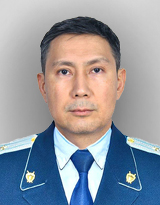
D. M. Kozhabekov
Almaty Academy of the Ministry of Internal Affairs of the Republic of Kazakhstan named after M. Esbulatov
Kazakhstan
Kazakhstan
Kozhabekov Dauren Meirkhanovich Doctoral Student, Master of Law
Almaty
References
1. Ott, T. Responding to the Threat of International Organized Crime: A Primer on Programs, Profiles, and Practice Points / T. Ott // United States Attorneys’ Bulletin. – 2012. – Vol. 60. – Pp. 1-24.
2. Di Nicola, A. Towards Digital Organized Crime and Digital Sociology of Organized Crime / A. Di Nicola // Trends in Organized Crime. – 2022. – Pp. 1-20.
3. Chawki, M. Nigeria tackles advance fee fraud [Jelektronnyj resurs] / M. Chawki // Journal of Information, Law and Technology. – 2009. – No. 1. – Rezhim dostupa: https://go.warwick.ac.uk/jilt/2009_1/chawki (data obrashhenija: 03.01.2026).
4. Borchashvili, I.Sh. Қazaқstan Respublikasynyң Қylmystyқ kodeksine tүsіndіrme: Zhalpy bөlіk. 1 tom / I.Sh. Borchashvili. – Almaty: «Zhety zharғy», 2022. – 820 b.
5. Yar, M. The novelty of cybercrime: An assessment in light of routine activity theory / M. Yar // European Journal of Criminology. – 2005. – Vol. 2. № 4. – Pp. 407-427.
6. R. Dhamija. Why phishing works: Proceedings of the SIGCHI Conference on Human Factors in Computing Systems (CHI 2006). – Montreal, Quebec, Canada, 2006. – Pp. 581-590.
7. F. Maggi, Are the con artists back? A preliminary analysis of modern phone frauds: Proceedings of the 10th IEEE International Conference on Computer and Information Technology. – Bradford, West Yorkshire, UK, 2010. – Pp. 824-831.
8. Amurtaeva, D.T. Nekotorye voprosy ugolovnoj otvetstvennosti za sozdanie i rukovodstvo transnacional'nymi prestupnymi ob#edinenijami / D.T. Amurtaeva // Құқyқ қorғau organdary akademijasynyң Zharshysy. – 2025. – № 3 (37). – S. 65- 72.
Review
For citations:
Kozhabekov D.M. THE CONCEPT AND SIGNS OF AN ORGANIZED GROUP IN MODERN CONDITIONS OF DIGITAL CRIME DEVELOPMENT. Bulletin of the Law Enforcement Academy. 2026;(2 (40)):60-68. (In Kazakh) https://doi.org/10.52425/25187252_2026_40_60
Views:
138
JATS XML






 Email this article
