


Ways to optimize the system of preservation and maintenance of socially useful connections of persons sentenced to imprisonment (statement of the problem of social work in penitentiary institutions)
https://doi.org/10.52425/25187252_2023_27_55
Abstract
In the penitentiary system of the Republic of Kazakhstan, regulation, maintenance and preservation of contacts with the outside world of persons sentenced to imprisonment during their stay in isolation from society is of particular importance. One of the most important factors contributing to the neutralization of psychological stress and social maladaptation is the ability of convicts to maintain and maintain positive social contacts that they had before their conviction or already during the period of serving their sentence. Successful resocialization is impossible or extremely difficult for people who have lost those social interactions that they need for a positive projection of their own future. At the same time, it should be borne in mind that stable social ties are the product of long–term coexistence and interaction. Accordingly, the risks of their loss or significant weakening should be assessed as one of the most significant «by-products» of serving a sentence of imprisonment. This raises the question of organizing the process of serving a sentence (in particular, penitentiary probation) in such a way as to use all available opportunities so that the convicted person does not become socially lonely.
About the Author
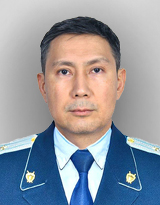
G. S. Kuzekova
Kostanay Academy of the Ministry of Internal Affairs of the Republic of Kazakhstan named after Sh. Kabylbayev
Kazakhstan
Kazakhstan
Kuzekova Gauhar Saktabergenovna – doctoral student, Master of Law
Kostanay c.
References
1. Stigma, G.E. Notes on the Management of the Spoiled Identify / G.E. Stigma. – N.J., Englewood Cliffs: Prentice Hall, 1963. – 147 p.
2. Lemert, E.M. Social pathology: a systematic approach to the theory or sociopathic behavior / E.M. Lemert. – New York: McGraw-Hill book Company, Inc., 1951. – 459 p.
3. Osipov, P.P. Teoreticheskie osnovy postroenija i primenenija ugolovno-pravovyh sankcij / P.P. Osipov. – Leningrad: Izd-vo LGU, 1976. – 135 s.
4. Murray, J. The Cycle of Punishment: Social Exclusion of Prisoners and Their Children / J. Murray // Criminology & Criminal Justice. – 2007. – №7(1). – pp. 55-81.
5. Mills, A. «Prisoners» families and Offender Management: Mobilizing social capital / A. Mills, H. Codd // Probation journal. – 2008. – №1(55). – pp. 9-10.
6. Stepanjuk, A.F. Ispolnenie nakazanija v vide lishenija svobody i osobennosti postpenitenciarnoj adaptacii osvobozhdennyh / A.F. Stepanjuk, V.M. Trubnikov. – Kiev: Izd-vo UMK VO, 1992. – 95 c.
7. Tulkinbaev, A.N. K voprosu social'noj adaptacii lic v ugolovno-ispolnitel'noj sisteme / A.N. Tulkinbaev // Vestnik Akademii pravoohranitel'nyh organov. – 2017. – №2(4). – S. 102-107.
8. Ugolovnoe pravo Rossii: uchebnik dlja vuzov. – T. 1. Obshhaja chast'; pod red. A.N. Ignatova, Ju.A. Krasikova. – M.: Izdatel'stvo NORMA, 2000. – 639 s.
9. Pinto, R.M. Using social network interventions to improve mentally ill clients’ well-being / R.M. Pinto // Clin Soc Work J. – 2006. – №34(1). – pp. 2-10.
Review
For citations:
Kuzekova G.S. Ways to optimize the system of preservation and maintenance of socially useful connections of persons sentenced to imprisonment (statement of the problem of social work in penitentiary institutions). Bulletin of the Law Enforcement Academy. 2023;(1 (27)):55-63. (In Russ.) https://doi.org/10.52425/25187252_2023_27_55
Views:
94
JATS XML






 Email this article
